
Pula Castles & Fortresses
Discover Pula’s Military Heritage
Pula is famous for its Roman monuments, but another remarkable layer of the city’s history lies beyond the old town. Fortresses, coastal batteries, military tunnels and defensive structures still surround the city and its harbour, revealing a side of Pula that many visitors never discover.
During the 19th century, Pula developed into the principal naval base of the Austro-Hungarian Empire. Protecting the harbour, Arsenal and fleet required an extensive defensive system that transformed Pula and its surroundings into a vast fortified military landscape.
The forts scattered around Pula today were not isolated strongholds. They formed part of a much larger network designed to protect one of the most important naval bases in the Adriatic.


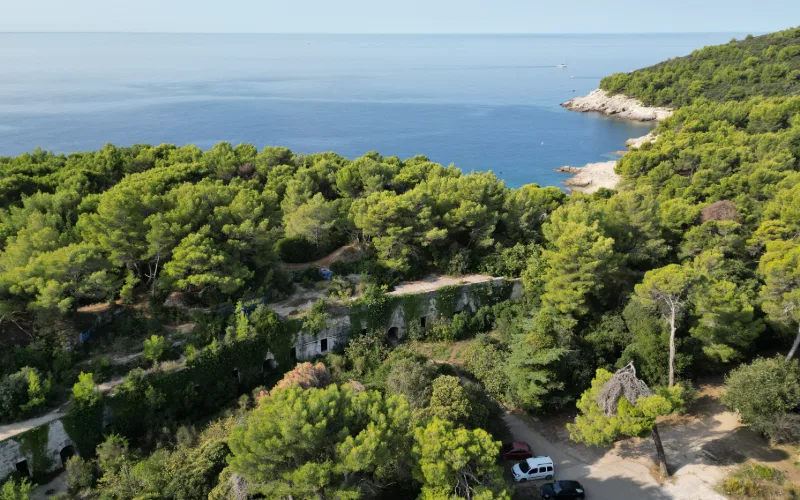

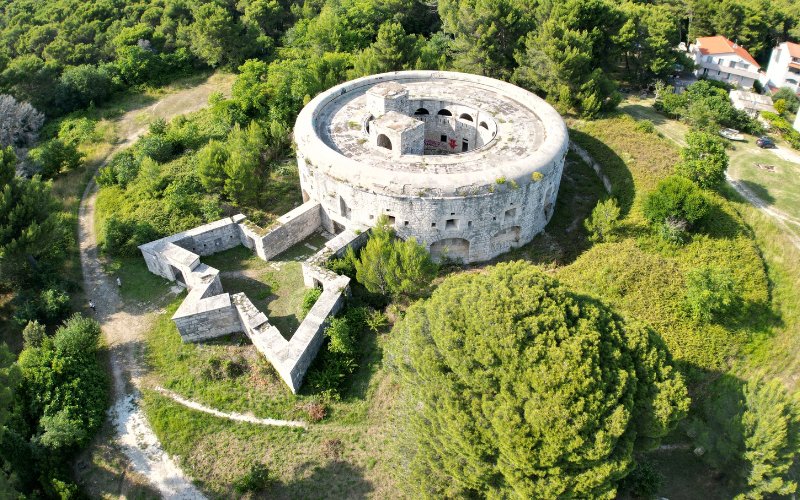
Explore Pula’s Fortresses & Military Sites
Discover the fortresses, coastal defences, bunkers, tunnels and other military sites that reveal Pula’s remarkable military past.
Why Does Pula Have So Many Fortresses?
To understand Pula’s fortresses, you first need to understand its harbour. Its naturally protected position made Pula an ideal naval base, and during the 19th century the city became one of the most important military ports of the Austro-Hungarian Empire.
As the naval Arsenal, shipyards and military infrastructure expanded, so did the need to protect them. Fortresses, artillery batteries and defensive positions were built around the harbour, along the coast and on the surrounding hills, creating a layered system designed to keep enemy ships and artillery as far away from the naval base as possible.
The forts visible around Pula today were therefore not independent castles. They were parts of one coordinated defensive network that grew and changed as military technology advanced. Together, they turned Pula and its wider surroundings into a heavily fortified naval city.

From Kaštel to Festung Pola
Pula’s military landscape was shaped over centuries, but its greatest transformation came during the 19th century. As the city grew into a major naval base, its defences expanded from individual fortifications into a vast system protecting the harbour, Arsenal and surrounding coastline.
Venetian Kaštel
Austrian Defences Begin
Pula Becomes a Naval Centre
The Fortress Ring Expands
Festung Pola
A Military Landscape Survives
Military Pula: Did You Know?
Pula’s military history is full of surprising details that reveal just how important the city once was as a naval and defensive centre.
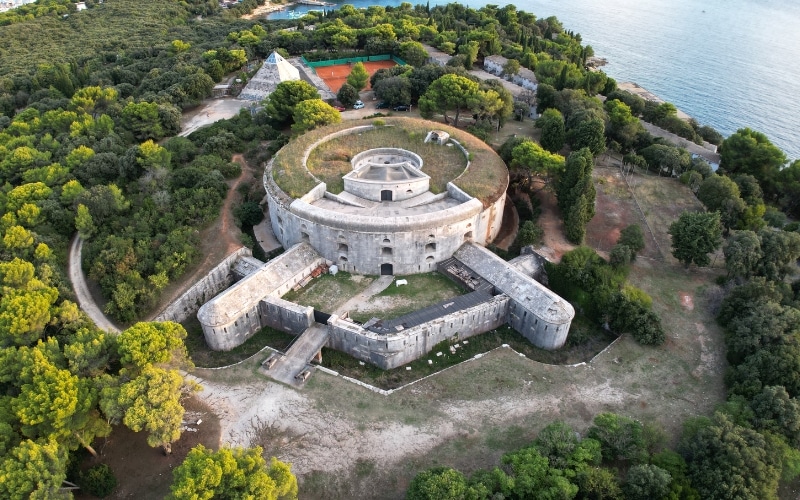
Around 42,500 Military Personnel in 1915
By late May 1915, around 42,500 officers and soldiers were serving within the wider Pula defence area during the First World War.

Around 28 Fortresses
The wider Pula defence system included around 28 forts, supported by a much larger network of batteries, shelters and other military structures.

More Than 200 Military Structures
Fortresses were only part of the system. Military infrastructure around Pula also included tunnels, batteries, trenches, observation points, shelters and support facilities.

Punta Christo Became a Major Coastal Fortress
By the end of the 19th century, Punta Christo had developed into one of the strongest coastal fortifications in the Austro-Hungarian defensive system.
How Pula’s Fortresses Changed
Pula’s fortifications evolved together with military technology. As artillery became more powerful and accurate, defensive structures had to become lower, stronger and more difficult to hit.
Artillery Towers
Early 19th-century defences included compact stone towers positioned to control important approaches to Pula and its harbour.
Circular Forts
Larger masonry forts with rounded forms provided stronger artillery positions and became an important part of Pula’s expanding defensive system.
Polygonal Fortresses
As weapons improved, newer forts adopted lower and more complex layouts designed to reduce exposure and improve defensive fire.
Armoured & Concrete Defences
By the late 19th and early 20th centuries, steel armour, concrete and more concealed gun positions increasingly replaced traditional exposed stone fortifications.
The changing shape of Pula’s forts tells the story of a military technology race: as artillery became more destructive, fortifications had to become stronger, lower and increasingly integrated into the surrounding terrain.
Underground Pula
Pula’s military landscape continues beneath the city. Tunnels, shelters and underground passages were created to protect people, military supplies and important infrastructure during periods of conflict.
The best-known part of this hidden network is Zerostrasse, a system of underground tunnels beneath central Pula. Originally developed for military and protective purposes, the tunnels today offer visitors a rare look beneath the modern city and into another layer of its wartime history.
Similar underground spaces, shelters and military passages can be found in other parts of Pula, showing that the city’s defensive system extended far beyond the forts visible on the surface.
From Fortresses to Modern Pula
Many of Pula’s former military sites have survived in very different ways. Some have found new purposes, while others remain quiet reminders of the city’s military past.

Kaštel
Once a strategic fortress above the city, Kaštel is now home to the Historical and Maritime Museum of Istria and the Fort Center, where visitors can explore the story of Pula’s fortifications.

Fort Verudela
This former Austro-Hungarian coastal fortress has been given an unusual new life as the home of Aquarium Pula, with its historic military architecture still forming part of the experience.
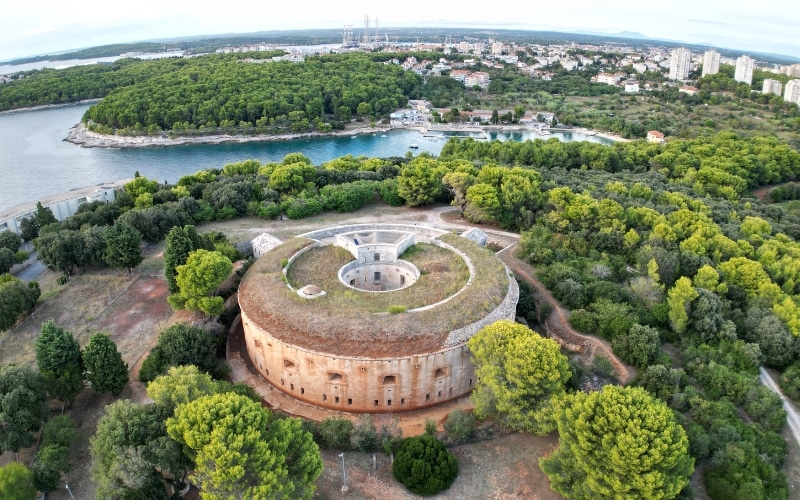
Fort Bourguignon
One of Pula’s distinctive circular forts, Bourguignon has survived beyond its original military role and has also been used for cultural and music events.
Visiting Pula’s Fortresses
Many of Pula’s military sites can be explored from the outside or visited as part of museums, attractions and public spaces, but access conditions vary between locations.
Check Access Before You Go
Some forts are open to visitors, while others may be closed, privately managed or located within restricted areas. Always check current access before visiting.
Wear Suitable Footwear
Older and abandoned military sites can have uneven stone, vegetation and rough terrain, so comfortable and sturdy footwear is recommended.
Respect Closed Areas
Do not enter fenced, unstable or restricted structures. Many sites are historic military buildings that have not been adapted for regular public access.
Combine History with the Coast
Many of Pula’s forts are located near beaches, coastal paths and viewpoints, making them easy to combine with a walk, swim or other places around the city.
Frequently Asked Questions About Pula’s Castles & Fortresses
- Why does Pula have so many fortresses?
- Pula has so many fortifications because it became the main naval base of the Austrian and later Austro-Hungarian Empire on the Adriatic. During the 19th and early 20th centuries, forts, coastal batteries and other defensive structures were built around the harbour and wider Pula area to protect the naval Arsenal, fleet and military infrastructure.
- When were Pula’s fortresses built?
- Pula’s fortifications belong to several historical periods. The Venetian Kaštel was built between 1630 and 1633, while most of the military forts seen around Pula today were built or extensively modernised during the 19th and early 20th centuries as the city developed into a major Austro-Hungarian naval base.
- How many fortresses are there in Pula?
- The wider Pula defensive system included around 28 forts together with a much larger network of coastal batteries, shelters, tunnels, observation positions and other military structures. The fortifications extended beyond the modern city into the surrounding coastline and islands.
- What are the best fortresses to see in Pula?
- Some of the most interesting fortifications include Kaštel in central Pula, Punta Christo near Štinjan, Fort Bourguignon, Monte Grosso and Fort Verudella, which today houses Aquarium Pula. The best choice depends on whether you are interested in museums, preserved military architecture, coastal scenery or more unusual historic sites.
- Can you visit Pula’s abandoned fortresses?
- Access varies from site to site. Some fortifications are established attractions or public spaces, while others may be closed, unsafe, overgrown, privately managed or located within restricted areas. Visitors should always check current access conditions and avoid entering fenced or unstable structures.
- What was Festung Pola?
- Festung Pola was the fortified defence system created to protect Pula as the Austro-Hungarian Navy’s principal Adriatic base. It included forts, artillery batteries, defensive positions, tunnels and supporting military infrastructure spread across Pula and the wider surrounding area.
- Are there military tunnels and bunkers in Pula?
- Yes. Pula’s military heritage extends underground and includes tunnels, shelters, bunkers and other protected spaces. The best-known example is Zerostrasse, the underground tunnel system beneath central Pula that formed part of the city’s wider defensive and shelter infrastructure.
- Are Pula’s fortresses worth visiting?
- Yes, especially if you are interested in military history, architecture or unusual places beyond Pula’s Roman monuments. The fortifications reveal an important part of the city’s history and many are located close to coastal paths, viewpoints, beaches and other attractions.


